Menu
  • Home
  • New Patient Center
    • Online Forms
    • Payment Options
    • Pet Selector
    • Veterinary Resources
    • What to Expect
  • About Us
    • Meet our team
    • Petsimonials
  • Pharmacy
  • Services
    • Allergy FAQ
    • Kidney failure in Dogs
    • Kidney Failure in Cats
    • Orthopedic Surgery
    • Wellness Plans
    • Microchip Identification
    • Grooming & Boarding
      • Boarding and Grooming FAQs
      • Pet Boarding FAQs
    • Preventative Care
      • Feline Vaccinations and Testing Schedule
      • Geriatric Care
      • Canine Vaccinations and Testing Schedule
    • Pet Wellness Exam
      • A Pet Owner's Guide to Understanding Wellness E...
    • Advanced Veterinary Services
      • FVRCP Vaccine for Cats
      • Surgery
      • Spay & Neuter
      • Spay & Neuter FAQs
      • Pain Management
      • Endoscopy
      • Dental Care
      • Cat Dental Care
      • Dog Dental Care
      • Pet Dental Care FAQs
      • Reproduction Services
      • Radiology Services
    • Vaccinations
    • Educational Services
    • Aging and Your Pet
    • Pet Ear Care
    • Pet Eye Infections
      • Pet Eye Infection FAQs
    • Pet Seizures
    • Pet Wellness Program
  • Contact Us
    • Appointment Request
    • Emergency
  • Blog
  • Veterinary Topics
Logo

(205) 681-1700

Make an appointment
  • Home >
  • Articles >
  • Pet Health >
  • Digestive and Oral Health >
  • Dentistry

Dentistry

  • Created in Pet Health, Digestive and Oral Health, Pet Health

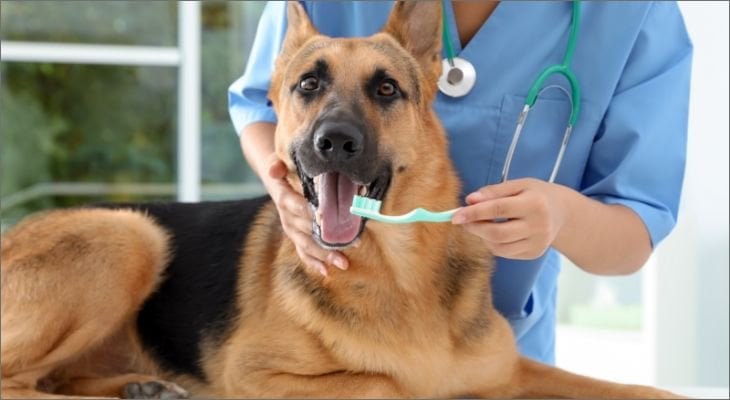
dog getting teeth brushed

Over 85% of dogs and cats have some type of periodontal disease. Periodontal disease simply means that the gums and bone that hold the teeth in place are being destroyed by oral bacteria. This preventable disease is the number one diagnosed disease in our pets, yet many animals suffer needlessly. Periodontal disease begins with gingivitis, or inflammation of the gum tissue, which is caused by plaque. Plaque is a mixture of saliva, bacteria, glycoproteins and sugars that adhere to the tooth surface.

Within minutes after a cleaning, a thin layer of plaque has adhered to the teeth. Eventually this hardens to become calculus or tartar. Calculus by itself is nonpathogenic - it does not cause disease. However, it does create a rough surface for more plaque to adhere to, and pushes the gums away from the teeth, which increases surface area for more plaque to adhere. Eventually, the supporting structures of the tooth (bone, tissue, periodontal ligament) are destroyed and the tooth becomes mobile and will either fall out on its own or need to be extracted. Signs of periodontal disease are bad breath (halitosis), reluctancy to eat, chewing on one side of the mouth, dropping food, pawing at the face or rubbing the face on the floor, drooling, becoming head shy, and painful mouth/face.

Veterinarians recommend the following care for pets:

STEP 1: Bring your pet in for a dental exam. Don't wait for his annual checkup if you suspect a problem.

STEP 2: Begin a dental care regimen at home. Brushing your pet's teeth daily is very important. We also recommend using a specially formulated dental rinse, and dental chews and food. Please ask us if you need instructions on brushing your pet's teeth, or if you have any other questions.

STEP 3: Schedule your pets for an annual teeth cleaning with x-rays. This is also very important and ensures we are catching any disease early enough to treat.

Periodontal disease and oral bacteria can easily affect other organ systems including the heart, liver, kidneys, lungs and brain. Make sure you bring your pet into the office for regular vet cleanings. Contact us if it's time for your pet's next cleaning.

  • Pet Health
    • Chronic Conditions
    • Digestive and Oral Health
    • Diseases and Viruses
    • Pests and Parasites
    • Orthopedics
  • Today's Veterinarian
  • Choosing Your Pet
    • Finding Your Pet
    • Cats
    • Dogs
    • Exotics
      • Amphibians
      • Birds
      • Reptiles
        • Lizards
        • Turtles
    • Small Mammals
      • Ferrets
      • Rabbits
      • Domesticated Animals
        • Prairie Dogs
      • Pocket Pets
        • Chinchillas
        • Guinea Pigs
        • Hamsters
        • Hedgehogs
        • Rats
    • Livestock
      • Cows
      • Donkeys, Horses & Mules
      • Goats
      • Pigs
      • Poultry
      • Sheep
  • Living With Your Pet
    • Bringing Your Pet Home
    • Children and Pets
    • Providing Care
    • Travel
    • Saying Goodbye
  • Newsletter Library
    • Cats
    • Tips for Pet Owners
    • Behavior & Training
    • Fleas & Parasites
    • Keeping Pets Healthy
    • Recognizing Illness
    • Nutrition & Food
    • Pet Dangers
    • Seasonal Topics
    • Visiting the Vet
    • Equine
    • Newsletter Archive
      • Fun with Pets
      • Unbelievable Pets
  • Video Newsroom
    • Health Topics
    • Technology and Science
    • Other Interests
  • Newsletter Library
  • Client Survey
  • Pets4Kids

Request An Appointment

Error!

    Location

    Find us on the map

    Office Hours

    Walk-ins are welcomed, but will have to wait until appointments scheduled at that time are seen.

    Our Regular Hours

    Monday:

    7:00 am-6:00 pm

    Tuesday:

    7:00 am-6:00 pm

    Wednesday:

    7:00 am-6:00 pm

    Thursday:

    7:00 am-6:00 pm

    Friday:

    7:00 am-6:00 pm

    Saturday:

    7:00 am-12:00 pm

    Sunday:

    Closed

    • Copyright © 2026 MH Sub I, LLC dba iMatrix.
    • Admin Log In
    • Site Map