
Common Injuries in Dogs
Do you know what to do if your dog suffers an injury? These tips can help you care for your pet after an accident.
Paw Injuries
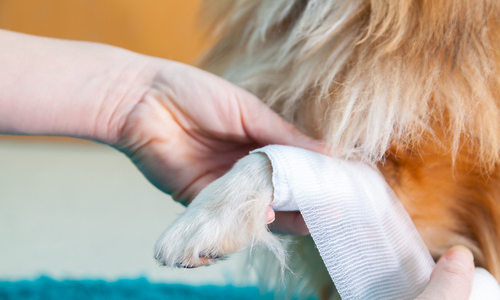
Paw injuries are particularly common in dogs. Hot pavement, broken glass, and chemicals can cause painful cuts or burns on paw pads. Your dog may limp or favor one leg after a pad injury. If you notice pieces of broken glass or other objects in your pet's paws, try to gently remove them. Don't force the objects if they won't move easily.
Apply gentle pressure with a clean cloth if your pet's paws are bleeding. (Be sure to remove glass or foreign objects first.) If you suspect that your pet has burned paws, use an icepack or cool running water to ease discomfort.
After you've offered basic first aid, take your pet to the veterinarian as soon as possible. The American Veterinary Medical Association recommends visiting the vet immediately if severe bleeding occurs anywhere on the body or bleeding doesn't stop after five minutes.
Soft Tissue Injuries
Bruises, tendonitis, bursitis, and strained or sprained muscles are considered soft tissue injuries. Your dog can develop one of these injuries during strenuous physical activity or simply by bumping into a hard object. Soft tissue injuries can happen to any dog but are particularly common in dogs that participate in agility training. Thirty-three percent of canine agility participants experienced injuries while involved in a study published in Veterinary and Comparative Orthopaedics and Traumatology. The injuries most often affected their backs or shoulders.
Bruises will generally go away on their own in a few days, but the pain from sprains and strains may last longer. Ice packs and heating pads can help keep your pet comfortable. Check with your veterinarian first before giving your pet painkillers, as some human drugs can be toxic in pets.
Rest helps muscles and ligaments heal, although convincing your dog to rest can be difficult. A crate can be helpful if your energetic dog won't stay still. If your pet still limps or is obviously uncomfortable a few days after the injury, call the vet.
Bites
Bites can be infected if they're not treated promptly. If your pet has been in a fight with another animal, conduct a full body examination to check for bite wounds and other injuries. Clean wounds with soapy water, then apply antibiotic ointment and a bandage.
Take your dog to the vet if wounds continue to bleed or you're concerned about less noticeable injuries. Bites can damage your pet's muscles, bones, or organs, even when they don't look particularly serious. It's also important to call the vet if your dog was bitten by a cat. Cats have long teeth that inject bacteria in the bite wound, increasing the risk of infection.
Auto Injuries
Despite all of the measures you take to protect your pet, your dog may dash in front of a car or truck one day. Even seemingly minor accidents can cause serious internal injuries. Your dog may seem fine initially but could soon develop serious health issues without prompt veterinary treatment. Bandage wounds and stabilize possible broken bones with splints made of towels, magazines, or other stiff materials before driving your pet to the veterinary office.
Cranial Crucial Ligament Tear
Cranial crucial ligament (CCL) tears made the list of top five dog injuries compiled by ASPCA Pet Health Insurance. The ligaments help keep your dog's knees stable. If your dog has a CCL tear, he or she may be reluctant to put any weight on the affected leg, or you may hear a clicking sound when your dog walks. Partial tears can cause pain when exercising, although your pet may seem fine when resting.
Surgery is the best option if your dog develops CCL. Without surgery, lameness may become permanent.
Nail Injuries
Your pet's nails may bleed if you cut them too short, or your dog catches the nail on something when running or jumping. Hold a styptic pencil against the nail to stop the bleeding. If you don't have a pencil, put flour on the nail instead. Take your dog to the vet if the bleeding doesn't stop after a few minutes or the entire nail is missing.
Are you concerned about an injury or change to your dog's health? Contact our office to schedule a convenient appointment.
Sources:
ASPCA Pet Health Insurance: Top 5 Dog Injuries
https://www.aspcapetinsurance.com/resources/top-dog-injuries/
Healthy Pets: A Major Recipe for Injury - Vets See No Shortage Every Year at This Time, 6/2/17